
What Is an NFT Marketplace and How Does It Work? Complete Beginner's Guide
What is an NFT marketplace and how does it work? Learn how digital art minting, crypto wallets, smart contracts, OpenSea, and Web3 ownership work.

In recent years, the digital asset ecosystem has evolved at an unprecedented pace. In the earlier days of the internet, digital media — such as illustrations, music tracks, videos, and graphics — was viewed almost purely as ephemeral content for entertainment. Anyone could right-click, save an image, and store an identical copy on their hard drive.
However, the emergence of blockchain technology has fundamentally transformed how we verify digital ownership, exclusivity, and provenance. Today, decentralized platforms known as NFT Marketplaces allow creators and collectors to create, buy, sell, and showcase unique digital assets. But how do these platforms actually function, can you genuinely make money from them, and what risks must you navigate? Here is an in-depth breakdown of everything you need to know.
What Is an NFT Marketplace?
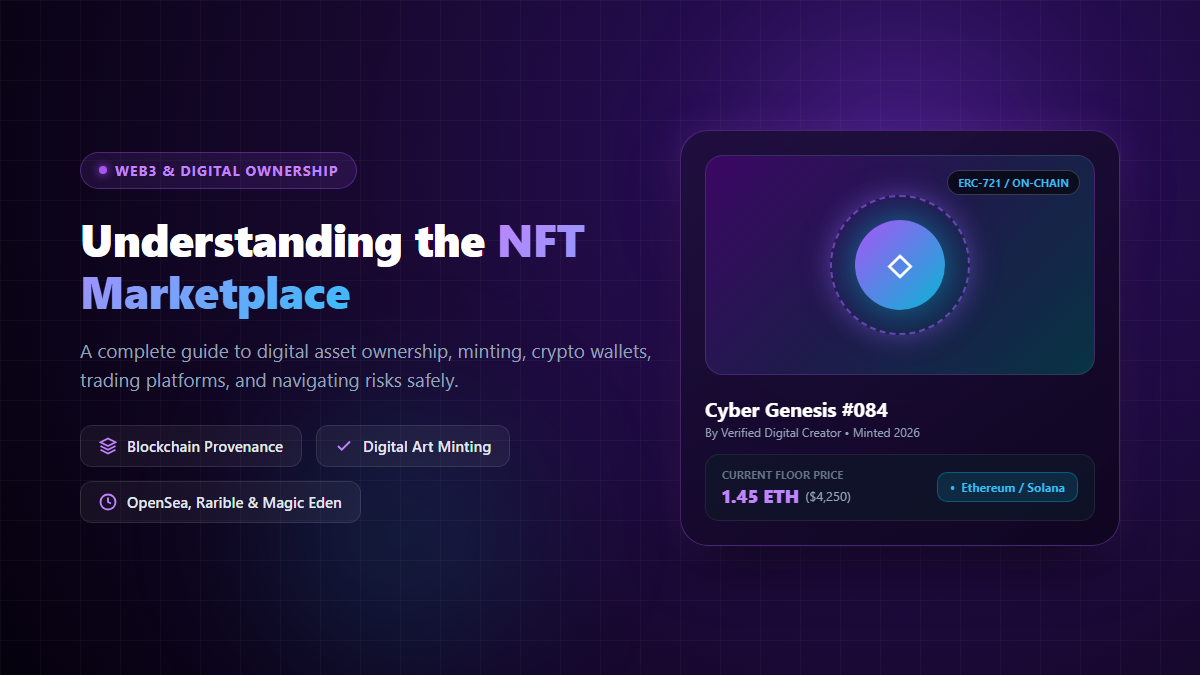
An NFT Marketplace is an online trading hub where Non-Fungible Tokens (NFTs) are minted, displayed, bought, and sold. In simple terms, it functions as an open digital bazaar built on top of decentralized blockchain networks.
To grasp how the marketplace functions, it is essential to understand what an NFT actually represents:
- Non-Fungible Defined: In economics, "fungible" means interchangeable with identical items. For example, if you trade a 100-taka or 10-dollar bill for another identical banknote, you retain the exact same purchasing value. By contrast, "non-fungible" refers to a one-of-a-kind asset with unique cryptographic attributes. You cannot swap Leonardo da Vinci's original Mona Lisa for an ordinary print and claim they are identical.
- Blockchain Provenance: NFTs are recorded on distributed ledgers (blockchains such as Ethereum, Solana, and Polygon). This immutable ledger preserves an unbroken record of the token's creation history, past sale prices, and current owner address.
While anyone can view or download an associated JPG or MP4 file, only the holder of the cryptographic token possesses the verified, verifiable digital deed of ownership.
How Does an NFT Marketplace Work? (Step-by-Step)
While interacting with Web3 platforms can initially seem technical, the workflow generally follows five straightforward steps:
- Setting Up a Non-Custodial Crypto Wallet: To interact with decentralized marketplaces, users need a compatible cryptocurrency wallet (such as MetaMask, Phantom, or Coinbase Wallet). Unlike traditional websites that rely on usernames and passwords, your wallet acts as your cryptographic login ID and holds the cryptocurrency needed for transactions.
- Connecting to the Marketplace: Users connect their digital wallet to their chosen marketplace via Web3 protocols. No credit card numbers or banking passwords are exchanged.
- Minting Digital Assets: Creators who want to sell artwork, music, photography, or 3D models upload their digital files to the platform. The process of publishing this file to the blockchain as an immutable token is known as Minting.
- Listing for Sale: Once minted, the creator can set an asking price. Marketplaces generally offer two primary selling models: Fixed Price (instant purchase) or Timed Auction (where interested buyers bid against each other until a closing deadline).
- Smart Contract Execution: When a buyer agrees to the purchase, a self-executing Smart Contract automatically transfers the digital asset to the buyer's wallet and releases the funds to the seller, simultaneously writing the new ownership record into the blockchain.
Top Popular NFT Marketplaces You Should Know
There are dozens of active marketplaces across different blockchain ecosystems, each catering to specific niches and artistic communities:
| Platform | Supported Blockchains | Primary Focus | Key Highlights |
|---|---|---|---|
| OpenSea | Ethereum, Polygon, Arbitrum, Base | All-round General Collectibles | Largest overall marketplace volume; beginner-friendly |
| Magic Eden | Solana, Bitcoin Ordinals, Polygon | Gaming, Cross-Chain, Ordinals | Low network transaction fees and fast execution |
| Rarible | Ethereum, Tezos, ImmutableX | Creator-Centric Digital Art | Community governance and robust royalty settings |
| Foundation | Ethereum | Curated High-End Fine Art | Gallery-style aesthetic for professional digital artists |
How Can You Monetize on NFT Marketplaces?
While headlines often showcase multimillion-dollar digital artwork sales, sustainable participation requires realistic planning. Here are the primary legitimate avenues for earning within the ecosystem:
1. Selling Original Digital Artwork
If you are an illustrator, 3D animator, concept artist, or graphic designer, you can tokenize and list your original creations. Artists with unique visual styles, consistent storytelling, and strong audience engagement often find dedicated collectors willing to invest in their vision.
2. Curating Themed Collections
Many creators succeed by designing cohesive generative or themed collections around specific cultural narratives, national heritage, futuristic aesthetics, or gaming avatars. However, creating a collection does not automatically guarantee buyers — marketing and community building are critical.
3. Secondary Market Trading (Flipping)
Some collectors buy underpriced NFTs during initial mint phases with the intention of selling them later at a higher floor price. It is critical to recognize that this is high-risk speculative trading. What trends today may have zero buyer demand tomorrow.
4. Providing Web3 & NFT Support Services
Not every creator possesses the technical or marketing expertise required to launch a project. If you have skills in smart contract development, UI/UX design, Discord community moderation, or crypto marketing, offering B2B services to existing creators and brands is often a far more dependable revenue stream.
Essential Realities & Safety Rules Before You Buy
Entering the NFT space without basic cybersecurity and financial literacy can lead to rapid financial losses. Always keep these four factors in mind:
- Understand Gas Fees: Every blockchain action (minting, listing, transferring) requires network computational fees known as Gas. On congested networks like Ethereum mainnet, gas fees can occasionally exceed the purchase price of an inexpensive NFT. Exploring Layer-2 networks (Polygon, Base) or Solana helps mitigate these costs.
- Verify Authenticity & Avoid Copycats: Bad actors frequently download artworks from prominent artists and re-upload them as fake NFTs on open marketplaces. Always inspect the creator's verified social media channels and match their official smart contract address before purchasing.
- Copyright vs. Ownership: Buying an NFT does not automatically give you the commercial copyright to reproduce, merchandise, or license the underlying art, unless explicitly specified in the creator's smart contract terms.
- Protect Your Secret Recovery Phrase: Your wallet's 12- or 24-word Secret Recovery Phrase is the master key to your funds. Never share it with anyone, enter it into a web form, or click on unverified "airdrop" links promising free NFTs. Legitimate marketplaces will never ask for your private key.
Can You Use NFT Marketplaces from Bangladesh?
From an educational and creative standpoint, anyone in Bangladesh can freely study blockchain development, understand how smart contracts operate, and master digital art creation. However, when it comes to financial transactions, significant local considerations apply:
Regulatory Context: In Bangladesh, the use and trading of decentralized cryptocurrencies fall under specific regulatory restrictions outlined by the Bangladesh Bank and relevant regulatory bodies. Before funding crypto wallets or attempting to withdraw funds to domestic financial institutions, users must strictly comply with national financial laws and foreign exchange regulations.
For individuals based in Bangladesh, the safest initial approach is focusing on the technical craftsmanship — learning blockchain architecture, exploring smart contract deployment on free testnets, and honing digital art skills — without exposing capital to speculative crypto transactions.
The Future Beyond Digital Art
While profile picture collections dominated initial market hype, the underlying architecture of NFTs extends far beyond speculative art. In the coming years, NFT technology is poised to play an important role in:
- Gaming Economies: True ownership of in-game skins, weapons, and virtual land that can be traded across different games.
- Event Ticketing: Elimination of counterfeit concert and sports tickets through on-chain verifiable passes.
- Digital Identity & Memberships: Token-gated access to exclusive software tools, industry clubs, and premium educational platforms.
Final Thoughts
The rise of the NFT marketplace marks a significant milestone in digital ownership and decentralized commerce. Whether you are an aspiring artist, software developer, or digital entrepreneur, understanding how blockchain smart contracts manage digital property is a valuable modern skill.
Approaching the market with caution, prioritizing security, and viewing Web3 through the lens of genuine technological innovation rather than a "get-rich-quick" scheme is the most prudent path forward. Furthermore, enterprises or innovators seeking custom smart contract architecture, minting engines, or dedicated marketplace portals can leverage specialized engineering partners — such as NFT Token Development solutions by Core Devs — to build compliant, scalable, and secure Web3 ecosystems.


