SpaceX AI Satellites: FCC Approves 1 Million Starmind in Orbit
The FCC approved up to 1 million SpaceX AI satellites on Nov 25, 2026. Starmind would run AI work in orbit and beam the results to Earth. Here is how it works, the maths, and the risks.
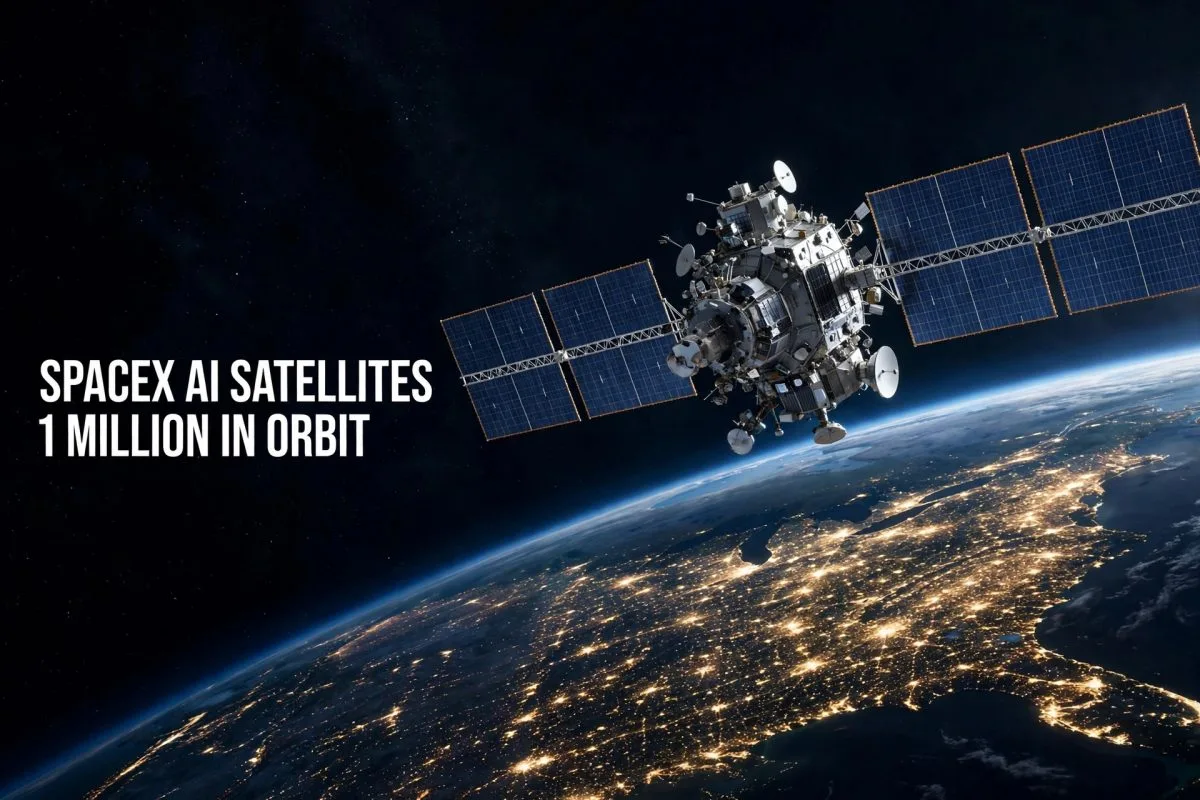
SpaceX AI satellites got the green light on 25 November 2026. The US Federal Communications Commission (FCC) approved SpaceX's plan to put up to 1 million data center satellites in orbit. The network is called Starmind. It would run AI work in space, then beam the results back down.
This guide explains what Starmind is, how it works, what the numbers mean, when it could happen, and why some scientists are worried.
Quick facts
- The FCC approved up to 1 million SpaceX AI satellites on 25 November 2026.
- Starmind, a network of data centers in low Earth orbit.
- 500 to 1,002 km above Earth.
- SpaceX plans to start flying Starmind satellites in 2027.
- First deadline: One working satellite in orbit by 25 November 2033, or the licence ends.
- Full build: All 1 million by 25 November 2040.
- Each one: Up to 250 kW at peak, 175 kW on average.
What are SpaceX AI satellites?
Starmind is not Starlink. Starlink craft move data from place to place, like routers in the sky. Starmind craft think. They run AI work on board, then send only the answer back to Earth. In short, Starlink is a pipe, and Starmind is a data center.
The idea is simple. AI needs huge amounts of power. Power on Earth is getting hard to find. Land is scarce. Grids are full. Cooling a data center takes a lot of water. SpaceX says space fixes all three.
SpaceX filed the plan on 30 January 2026. The FCC approved it on 25 November 2026. It called it a historic first: the first US licence for a full network of data centers in space. FCC Chairman Brendan Carr said, "America is leading the world into the era of super intelligence."
How SpaceX AI satellites work
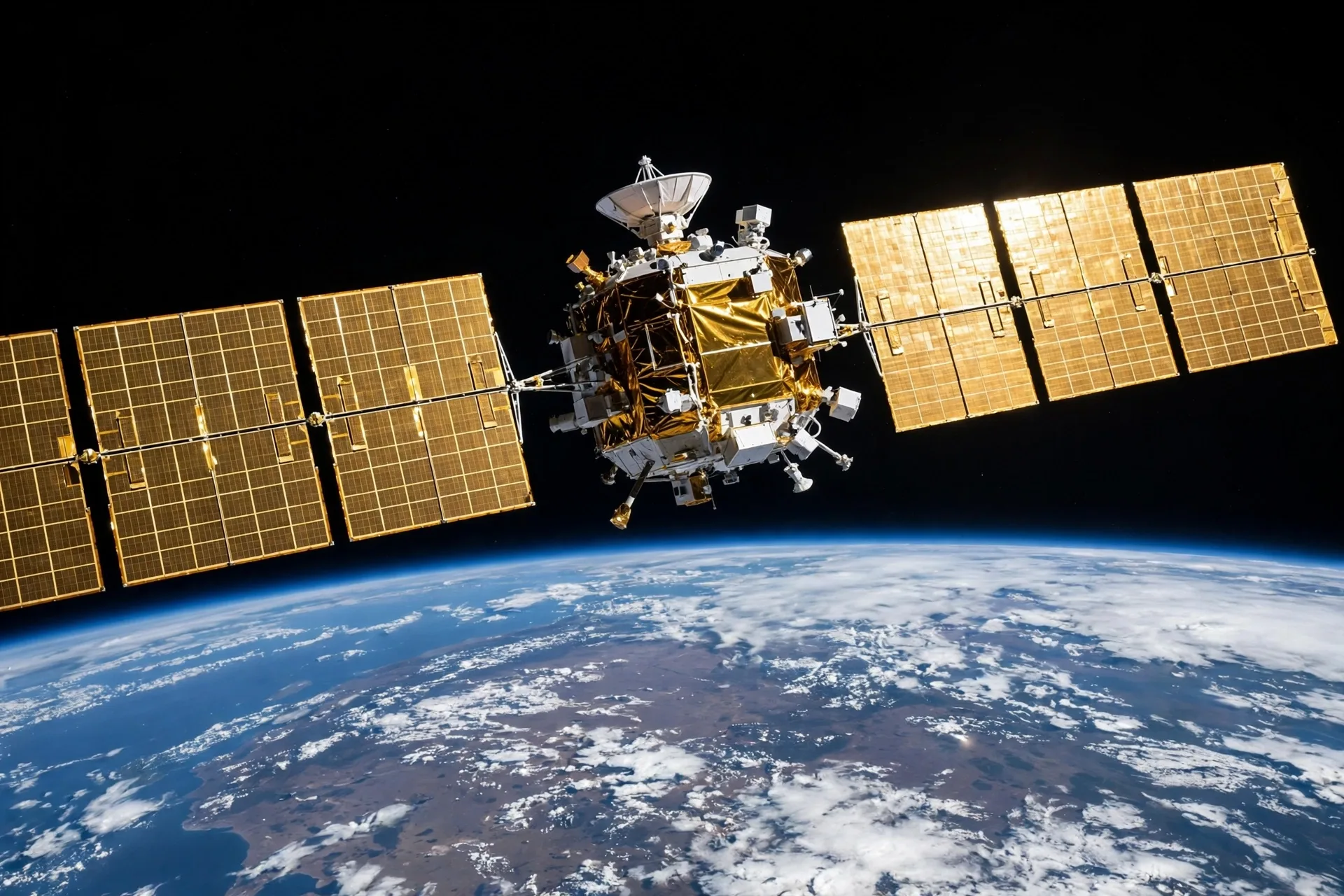
Each one is a small data center with wings. SpaceX calls the first design AI1. It is 30 m tall, with solar wings 75 m across.
Solar power. They fly in a path that keeps them in sunlight almost all the time. No clouds, no long nights, so each one gets steady power, day after day.
Cooling. Space is cold, but it is also a vacuum, so heat has nowhere to go. SpaceX says heat radiates freely into space. Its design cuts cooling power a lot. Not every scientist agrees. We cover that below.
Chips. In August 2026, SpaceX said it would build on Nvidia's Vera Rubin GPUs with Vera CPUs. Its own page also says the design can take parts from any firm. No final chip list is public yet. Nvidia chips power most AI work today. Our guide to Jensen Huang's return explains why the firm matters so much.
Laser links. They talk to each other with laser links. They send results down through Starlink. Light moves faster in a vacuum than in glass fibre, so data can move fast. SpaceX is also building a Gigasat Factory in Bastrop, Texas, to make them at scale. It will turn out thousands a year from late 2027.
The maths: what 1 million satellites really means
One million is a hard number to picture, so here is the maths. Each AI1 gives 175 kW on average.
| Satellites in orbit | Power |
|---|---|
| 1 | 175 kW |
| 10,000 | 1.75 GW |
| 100,000 | 17.5 GW |
| 1,000,000 | 175 GW |
A large ground data center uses about 100 MW. So 175 GW equals about 1,750 of them. That is the scale SpaceX is talking about, if it ever builds the full network.
Now look at the launches. Starship can carry 30 to 50 of them per launch, based on reports from June 2026. At 40 per launch, 1 million satellites need 25,000 launches. At 30 per launch, the count rises to about 33,000. Even at 50 per launch, it is still 20,000 launches. That is why the first real test is the 2027 prototype.
For scale, about 17,000 satellites orbit Earth today. Starmind would add about 59 times that number. Starlink has just over 11,000 in orbit. Starmind would be about 90 times bigger.
Starmind vs Starlink: what is different
| Starlink | Starmind | |
|---|---|---|
| Job | Move internet data | Run AI work |
| What it does | Relays data from place to place | Computes answers on board |
| Satellites in orbit | Just over 11,000 | None yet |
| Power per satellite | Small | Up to 250 kW at peak |
| How it links | Radio and laser links | Laser links, results sent down through Starlink |
The timeline: when will it happen
The FCC licence comes with strict dates. Miss one, and the licence can end.
| Date | What must happen |
|---|---|
| 2027 | First Starmind satellites fly; Gigasat Factory starts mass production |
| 25 November 2033 | First working satellite in orbit |
| 25 November 2035 | 100,000 satellites, or 10% of the network |
| 25 November 2038 | 500,000 satellites, or half the network |
| 25 November 2040 | All 1 million satellites |
The licence runs for 15 years from the first launch.
Use this list to follow the story.
- Watch the 2027 prototype. The first AI1 launch is the real test.
- Watch the Starship launch rate. Thousands of launches a year would be needed. No rocket has ever flown that often.
- Watch for a real AI job. The first time one runs a job for a paying user, the story moves from a plan to a product.
Why scientists are worried
Not everyone cheered. The American Astronomical Society, Viasat, and Amazon's Kuiper network all asked the FCC to deny the plan.
The night sky. They are big, with 75 m wings, so they would look bright from Earth. The American Astronomical Society said it was "disheartened and dismayed" by the decision. It said they would shine as very bright objects for long parts of the night, and hurt both star study and stargazing.
Space junk. One crash can start a chain of crashes, each one making more debris. Adam Becker, an astrophysicist, warned of "a cloud of debris" in low Earth orbit, where weather and telecom craft also fly. He called the idea of launching a million satellites "a fantasy" and said, "It's not going to happen."
Heat. Space feels cold, but a vacuum traps heat much like a thermos. Becker said there are "basic physical limits" to radiating that heat away.
Launches and reentries. Thousands of launches, plus old craft burning up on reentry, would add pollution to the air. The FCC said it would not require more review of the environment under its October 2026 order. It said the plan fits its debris rules. It also set one clear limit. SpaceX asked to move old craft above 600 km into graveyard orbits. The FCC said no.
Our honest take
The FCC gave SpaceX permission, not a promise that Starmind will work. The approval is real. It is a big moment for space and AI. But a licence is the easy part. The hard parts are the physics, the factory, and the launch rate.
Our view is plain. Watch the 2027 prototype, not the 1 million number. If AI1 flies and runs real AI work, the plan is serious. If it slips, it will stay small.
SpaceX is now a public firm. Our Anthropic IPO guide notes it raised $75 billion in June 2026. That was the old record for the largest IPO. That cash helps, but it does not change the physics. The AI work they would run is the same kind of work behind ChatGPT. Our GPT-6.2 Sol guide shows what the newest ChatGPT model can do.
If you use AI tools for work, nothing changes for you today. Your apps run on ground data centers. They will for years. Starmind is a bet on the 2030s.

Stay safe: fake Starmind links are already out there
Big space news always brings fake links. Only trust spacex.com, fcc.gov, and known news sites for Starmind news. Never pay for "early Starmind access", "space data center shares", or a "Starmind token" from a random post or ad. SpaceX has not offered any public way to buy in. If a post asks for your password or a one-time code, it is a scam.
Frequently asked questions
What are SpaceX AI satellites?
The Starmind network: up to 1 million craft that run AI work in orbit and send the results to Earth. The FCC approved it on 25 November 2026.
How many satellites did the FCC approve?
Up to 1 million, at 500 to 1,002 km up. The first one must fly by 25 November 2033, or the licence can end.
When will Starmind launch?
The first launches are planned for 2027. Mass production starts late that year. No service date has been given.
How is Starmind different from Starlink?
Starlink moves internet data from place to place. Starmind runs AI work on board and sends only the answer down, through Starlink.
Will Starmind make my internet faster?
No. Starmind is built for AI work, not for home internet. SpaceX has not said it will change Starlink speeds.
Is 1 million satellites safe for the night sky?
Scientists worry. The American Astronomical Society says the big, bright craft would harm star study. The FCC said the plan fits its debris rules.
Need help?
Starmind is the boldest AI plan yet: 1 million data centers in the sky, if SpaceX can build them. Watch the 2027 prototype. Judge the plan by what flies, not by what is filed. Questions? Email us at hello@trickandtech.com and we will get back to you.
Founder and Lead Technology Editor at Trick & Tech. Specializes in artificial intelligence tools, Android ecosystems, consumer hardware analysis, and practical digital workflows with over 5 years of hands-on tech publishing experience.