
How to Make Money Online Without Clients: 5 Proven Methods for Beginners
Can you make money online without clients? Discover 5 scalable methods for beginners: digital products, affiliate marketing, video content, and microtasks.

When most people first explore ways to earn money on the internet, their minds immediately jump to traditional freelancing: opening an account on Fiverr or Upwork, hunting for gigs in Facebook groups, or sending dozens of cold proposals to agencies. While freelancing is a legitimate career path, it harbors a discouraging reality for beginners: landing that first paying client is brutally difficult.
Even if you possess solid graphic design or writing skills, competing against established freelancers with hundreds of five-star reviews can leave you waiting weeks or months without a single order. This brings up an important question: Is it possible to start generating an income online without chasing clients, submitting bids, or dealing with endless customer revisions?
The answer is a resounding yes. Instead of trading your hours directly for client service requests, you can build digital assets, distribute helpful content, or leverage decentralized task platforms. Here are five practical, client-free models every beginner should understand, along with a structured plan to get started.
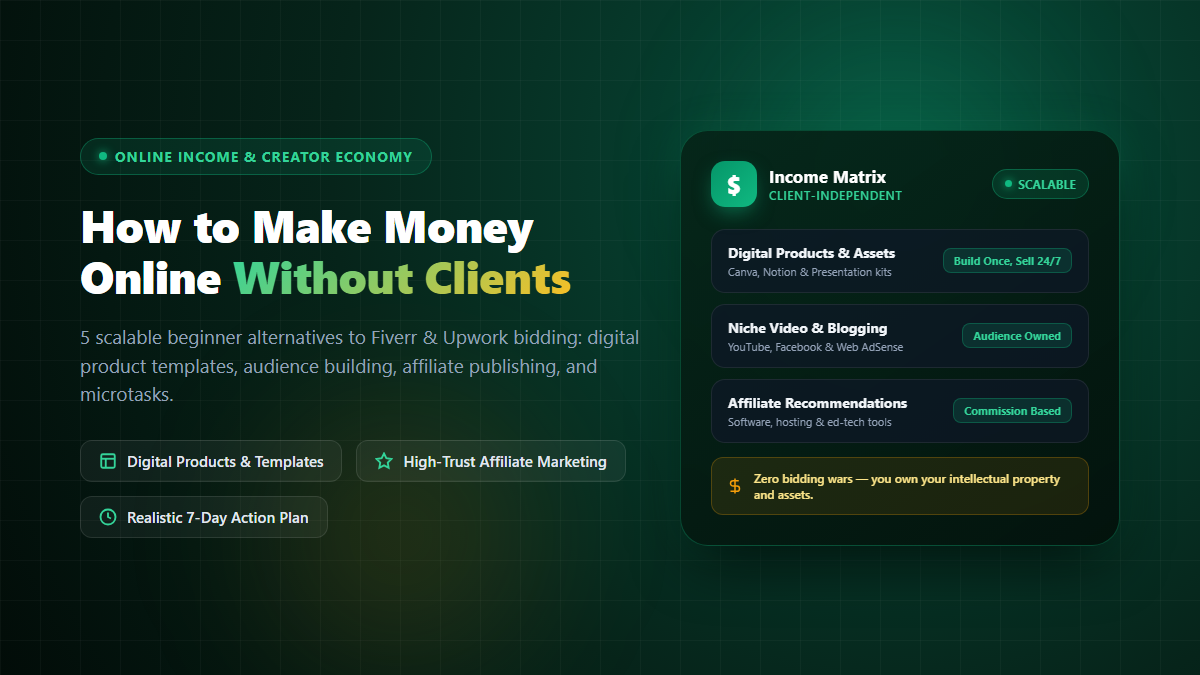
1. Create and Sell Reusable Digital Products
The single greatest advantage of digital assets is the "create once, sell repeatedly" principle. Instead of designing a custom social media banner for a single client who pays you once, you can design a versatile bundle of templates and sell copies to dozens of buyers worldwide.
You don't need complex software engineering skills; accessible platforms like Canva, Notion, and Google Docs allow anyone to create high-demand digital assets:
- Professional Resume & CV Templates: Clean, ATS-friendly resume templates formatted in Canva, Word, or Figma for job seekers.
- Social Media Post Bundles: Packages of 30 to 50 pre-designed, niche-specific post templates for small businesses (e.g., real estate agents, fitness coaches, or cafes).
- Notion Productivity Dashboards: Student study planners, habit trackers, freelance bookkeeping dashboards, and project organizers.
- Presentation Slide Decks: Professional pitch decks, business proposal templates, and academic presentation slides.
- Printable Planners & Academic Study Guides: Detailed study summary sheets, digital journal layouts, and printable checklists.
How to Begin Selling Digital Products:
- Identify an Exact Audience Pain Point: Don't design generic templates. Focus on a specific group — such as helping local clothing boutiques schedule their weekly Instagram promotions.
- Build a High-Quality Solution: Create a polished, easily editable template kit.
- Design Compelling Mockups: Showcase how the finished template looks across realistic phone and laptop screens.
- List on Marketplaces or Social Channels: Distribute your products on digital storefronts like Gumroad, Payhip, Etsy, or your own social media pages.
- Refine Based on Early Feedback: Improve your product packaging and instructions based on the initial questions buyers ask.
2. Build Niche Content on YouTube or Social Media
If you possess knowledge or enthusiasm for a specific topic, creating helpful video tutorials allows you to build an audience without ever answering to a demanding client. Rather than selling your time, you are building an authoritative media channel that works for you 24/7.
Lucrative niche topics that beginners can start with include:
- Android smartphone hidden features, battery optimization, and troubleshooting guides.
- Free artificial intelligence tools and prompt engineering tutorials.
- Basic computer repairs, networking fixes, and software walk-throughs.
- Practical digital literacy tutorials tailored for students and remote workers.
How Video Channels Generate Revenue:
- Platform Ad Revenue: Once you meet eligibility thresholds (such as the YouTube Partner Program or Meta In-Stream Ads), you earn passive income from automated ads.
- Affiliate Links: Recommending software, accessories, or equipment in video descriptions.
- Brand Sponsorships: Relevant companies paying for dedicated product mentions once your viewership grows.
- Selling Your Own Digital Templates: Channeling your viewers to your own digital products.
Important Reality Check: Do not re-upload stolen or copyright-protected videos hoping for quick money. Sustainable channel growth requires original value, consistent uploads, and strict compliance with platform copyright policies.
3. High-Trust Affiliate Marketing: Earn Without Creating Products
Affiliate marketing allows you to earn commissions by recommending products, software, or digital services created by other companies. When someone completes a qualified purchase or signup through your unique tracking link, the merchant pays you a predetermined percentage of the sale.
For example, if you write or record an in-depth tutorial comparing web hosting providers or productivity tools, you can incorporate approved affiliate referral links within your guide.
Core Principles for Affiliate Success:
- Integrity Over Fast Commissions: Never recommend low-quality software simply because it pays high commission rates. Your long-term reputation and audience trust are your most valuable assets.
- Transparent Disclosures: Always disclose clearly that your content contains affiliate links; ethical transparency builds reader loyalty and complies with international advertising standards.
- Verify Regional Payment Support: Before committing time to an affiliate network, confirm that their payout methods (such as Payoneer, direct bank wire, or PayPal) are supported in your home country.
4. Microtasks and Remote AI Training Data Labeling
For individuals who want to start earning immediate pocket money without dealing with client interviews, microtask and data annotation platforms offer discrete, structured work paid on a per-task basis.
Common tasks on these platforms include:
- Classifying and categorizing images for computer vision models.
- Evaluating and fact-checking the conversational outputs of large language models (LLMs).
- Data entry, document verification, and search engine relevance auditing.
Established platforms include DataAnnotation.tech, Clickworker, Appen, and Remotasks (Outlier).
Critical Security Warning: Legitimate microtask platforms will never ask you to pay an upfront registration fee, deposit money to unlock tasks, or share sensitive banking passwords. Any website demanding payment before giving you work is an outright scam.
5. Launch an Informational Blog or Niche Website
If you prefer writing over video production, launching an independent niche blog or tech tutorial website gives you total editorial freedom. You don't report to a manager, you choose your own schedule, and you own the underlying digital real estate.
By publishing detailed, search-engine-optimized answers to common technical queries — such as software troubleshooting guides, app reviews, and cybersecurity tutorials — you attract organic traffic from Google. Once regular visitors arrive, you monetize through contextual display ads (like Google AdSense), affiliate partnerships, and sponsored articles.
Skill-to-Method Matchup: Which Path Fits You Best?
| Your Core Strength | Recommended Method | Primary Advantage | Key Challenge |
|---|---|---|---|
| Graphic & Layout Design | Digital Product Templates | Create once, scale infinitely | Initial distribution and marketing |
| Speaking & Video Presentation | YouTube / Social Video | High personal branding & ad earnings | Requires consistency over months |
| Research & Clear Writing | Niche Blogging & Tutorials | Long-term search traffic equity | Learning SEO and patience for indexing |
| Evaluating Products & Software | Affiliate Marketing | No need to manage product inventory | Maintaining trust and organic traffic |
| Attention to Detail & Speed | Microtask & AI Annotation Platforms | Immediate start without audience building | Lower earnings ceiling; task availability |
A Realistic 7-Day Action Plan for Beginners
Do not attempt all five models simultaneously. Choose one path that aligns with your present skills and execute this focused seven-day sprint:
- Day 1 — Audit & Selection: Write down your current technical skills, software comfort, and available weekly hours. Select one single path.
- Day 2 — Market Research: Study three successful creators or stores operating in your chosen space. Note what problems they solve.
- Day 3 — Tool Setup: Set up your accounts (Canva, Gumroad, WordPress, or YouTube) and learn the essential interface controls.
- Day 4 — Build Your Minimum Viable Product: Create your very first template, publish your first tutorial article, or record your initial video guide.
- Day 5 — Launch & Distribute: Publish your work live on your chosen platform with clean presentation and descriptive tags.
- Day 6 — Quality Audit: Review your work objectively. Check visual formatting, proofread text, and test download links.
- Day 7 — Review & Roadmap: Note what you learned, what roadblocks occurred, and set concrete production goals for the upcoming week.
Final Thoughts
Working online without clients is completely achievable, but it is not a shortcut to effortless wealth. Client-free income models replace client management with asset management — you must consistently create quality products, respect your audience's intelligence, and cultivate patience.
Pick one method, start your seven-day action plan today, and focus on building assets that compound in value over time.
